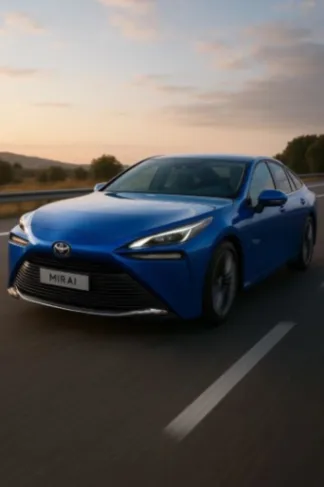
Toyota Mirai
Welcome, Guest! 🚗 Toyota Mirai - General Concept 🎉
Powers an electric motor
There are at least two generations of the Mirai:
First Generation (2015–2020)
Uses fuel cells, either partially mounted under the seats or configured
in a special way. Hydrogen capacity, power, and energy efficiency are
lower than in newer versions.
Second Generation (2020–2021)
Significantly updated in a number of areas. Some key improvements include
the switch to the new GA-L platform and rear-wheel drive. Weight
distribution and the center of gravity were improved through the
repositioning of the fuel cell, tanks, and motor.
Hydrogen capacity increased because a third tank was added. The overall capacity increased from approximately 4.6 kg to approximately 5.6 kg.
Fuel-cell performance and power density increased, while dimensions and weight were reduced. The efficiency of auxiliary systems, including the battery, boost converters, and cooling system, was also improved.
Key parameters:
Fuel-cell stack power: approximately 128 kW for the second generation.
Hydrogen capacity: approximately 5.6 kg in three tanks.
Driving range: approximately 650 km on a combined cycle for the second
generation.
Hydrogen refueling time: approximately 3–5 minutes, depending on the
pressure, station, and conditions.
Cold-start performance has been improved. The second-generation vehicle can start in temperatures down to approximately −30 °C.
Advantages:
Zero CO₂ and pollutant emissions during operation, except for water.
Fast refueling comparable to gasoline and natural-gas vehicles.
Long driving range, especially in the newer generation.
Limitations and challenges:
There are still relatively few hydrogen refueling stations, especially
outside certain regions such as California and Japan. Both the vehicle
and hydrogen fuel may currently cost more than many electric vehicles
or hybrids.
The storage, transportation, and production of clean hydrogen remain important challenges in making the entire life cycle environmentally friendly.